
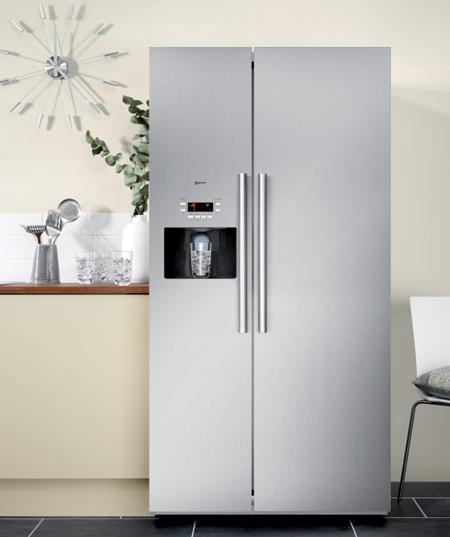
Having a good understanding of how your refrigerator keeps your food cold can be incredibly helpful through the lifespan of your appliance. This is especially true if you need to trace a problem. So put on your reading glasses, because with a few examples and some pretty pictures, I am going to guide you through the ins and out of your friendly neighbourhood fridge freezer.
The Role of Gases in refrigerator
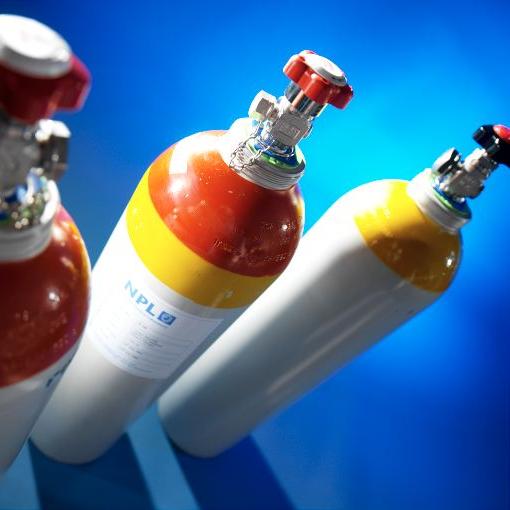
A general rule with gases is that, when they are compressed, they heat up. It’s kind of like when it’s cold in the morning, and you curl into the foetal position to get warmer. Basically, when gases are forced to be confined to a smaller space, each particle hits others far more frequently, causing a much larger amount of friction.
So how do gases cool? Well, when we take the gas from a confined environment, and release it into the wild, so to speak, the gas quickly cools down, as the particles have, in comparison, a massive amount of space to roam free in. Refrigerators take advantage of this handy aspect of the laws of physics. The reason the inside of your fridge can stay so consistently cold is the decompression of gases inside it.
Pipe it Like it’s Hot
One thing that Oliver Evans must have pondered before he invented the refrigerator (God bless him) is how exactly to utilise this gaseous habit, to the advantage of keeping your food at a lovely low temperature. Well, it turns out that it’s all to do with pumps and valves.
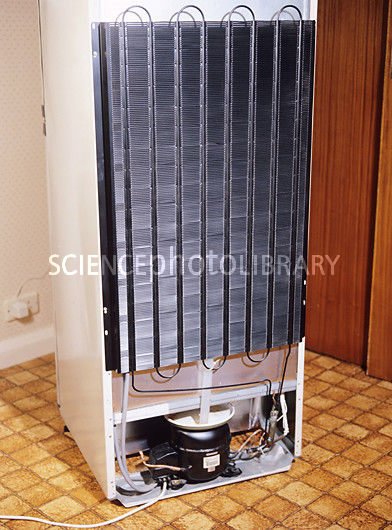
Modern refrigerators use a coolant liquid called a refrigerant, which evaporates at extremely low temperatures inside the piping system called the chilling cabinet. On the inside of the fridge, the refrigerant is evaporated when it moves through an expansion valve - it works like a funnel, the coolant going in the small end, and coming out the large end as a gas - and, as it passes the food in the fridge, removes the heat from each item and takes it with the gaseous current. When the current reaches the compression valve - which works in the opposite way as the expansion valve - the gas is suddenly compressed, and releases the heat taken from the inside of the fridge, turning the refrigerant back into a liquid. That’s why you’ll find that the back of your fridge is actually really warm.
The gas is pumped around this circuit by a… well, a pump. It’s powered by electricity, and is responsible for that humming sound you can hear if you listen closely to your beloved fridge. Cool, right?
Food for Thought
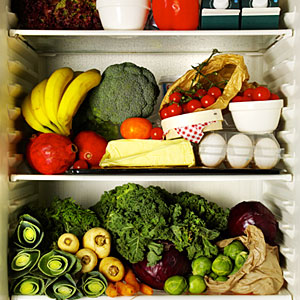
The reason that a refrigerator even exists is that it prevents bacteria making a meal of your dinner before you get a chance to. Bacteria can make short work of your leftovers at room temperature. However, at lower temperatures, bacteria cannot move as quick, and so the colder you keep your food, the longer it lasts. In that way, freezers work in the same way as fridges, though at a much lower temperature, of around -18°C, and this is why food in a deep freeze can well outlive its sell-by date.
So that’s the basics of how your friendly fridge helps keep your food edible for longer. Now, go and give it a hug. Go on, a big hug. It certainly deserves it.







[...] first. Make the learning process creative and fun. Use magnetic letters. Kids love sticking them on refrigerators and boards. Make them spell their name. They must recognize each alphabet and know the sound of [...]